inspiration · personal development · relatable · self help · wisdom

Mantras and Quotes for a Happier Life

If you want to manifest a happier life, become a lifelong collector of positive quotes. Some positive quotes resonate on such a deep level that they become mantras. By definition, mantra is a word, phrase or sound that is repeated, often in prayer or meditation. Mantras help to focus the mind and to promote mental and spiritual well-being. Over time, positive quotes and mantras can weave themselves into your heart and soul. It can happen in such an integrated way that they change your life. You can access this valuable coping skill daily, even hourly.

Read on to learn some of the most life changing and impactful mantras and quotes for daily life. Anyone can learn these quotes and mantras, which starts by just reading them each day. Over time, they become a habit and a practice. The human mind tends to lean toward the negative. So you want to avoid living on autopilot, just thinking whatever thoughts fall into your head. You get to choose your thoughts, so you might as well choose good ones!

I’ve got this. This is such a common affirmation, that chances are you probably already say it multiple times a day. Even for seemingly menial tasks like carrying laundry downstairs and not wanting to drop anything. It is just a simple reminder in the moment that YOU CAN DO HARD THINGS.

“I get to instead” of “I have to.” How often do we say to ourselves that we HAVE TO do something? “I have to go to work/school.” “I have to take the kids to their appointment.” “I have to go to the store.” What’s interesting about the three examples, is that they’re privileges. If you’re honest with yourself, you may actually like doing those things. Saying “have to” to “get to” moves us from a place of dread to a place of gratitude.

I want to make myself proud. When you make the statement “I want to make myself proud,” it’s guiding you to alignment. It’s a reminder to be true to yourself and the type of person you want to be. At first, you might lean toward thoughts of guilt and areas where you have not felt proud of yourself. That’s normal! On a sheet of paper, make a two-column chart. On the left side jot down any of these areas. On the right, you list action steps of what you can do to make yourself proud in this area. Let’s say cleaning your house is an area you don’t always feel proud of. But you can break it down into small chores over time so that you will feel proud. You deserve a clean home. Your family deserves a clean space to live. And when you do things that move you in that direction, you feel proud.

What can I do today to make tomorrow even better? This one is a “magical sentence.” What would your life be like a year from now? Five, ten years from now – if you asked yourself this question every day? It’s one to cling to all day everyday, so much so that it can become your overall VIBE. Start thinking of things you can put into place now, so that tomorrow will run more smoothly. Engage in this practice throughout your day. We all probably do some version of planning ahead to put things in place for our future. Making this a daily mantra can change your life, adding so much peace and a sense of calm.

Assume positive intentions. If you’re someone who tends to be skeptical and cynical, this one is a game-changer. It reminds you to give others the benefit of the doubt. It will help you to become more trusting of others. It allows you to make the shift from assuming the worst in others to looking for the good. Which leads to the next mantra.

Look for the good. Look for the good in others, in yourself, in circumstances, and in difficulties. It will shift your negative thinking to a more positive way of looking at everything. You can place post-its with this quote in areas where you spend a lot of time. Each day, and even in the present moment, ask yourself what good can be found. The impact of this simple daily process will train your brain to look for (and find) a better life.

Things are getting better all the time. Say this to yourself daily. It will help you make this mindshift change: The things that lie ahead are going to be much greater than anything that you’ve left behind. Of course, no one is so naive as to think you won’t have adversity. But you should recognize and believe that the mind is powerful. Our thoughts are powerful. You want to manifest a great life for yourself and your family. Believing that the things your heart wants are coming is an important part of the process of becoming.

Who I am in Christ. This is a series of mantras that come from Joyce Meyer, author and speaker. How often do we get in our own heads? We say negative things about ourselves, focusing on all the things that we think are wrong with us. What if you spent that same mental energy focusing on what is right about you? What if you focused on who God says you are? You can find a sermon where Joyce Meyer shares these. Just do a simple Google or YouTube search for “Who I am in Christ Joyce Meyer.” Be prepared for an emotional reaction when you hear them aloud. You may tear up, the truth resonating with every fiber of your being. Again, you can find a similar and equally powerful list of mantras in this post. Consider printing them out and posting them somewhere you will see them everyday. Better yet, write them out. That way you can commit them to memory and hold them in your heart and mind.

My sincere hope is that you can find and apply any one or more of these mantras to your life. The consistent daily practice of repeating them will elevate your thinking. Your improved thinking will change your life. Namaste.

health · inspiration · personal development · self help · wisdom

Designing Your Perfect Day

Designing your perfect day is one of the best choices you can make to bring joy into your life. It’s the idea that begins with simply making a list of all of the things you would do on your ideal, perfect day. All of your favorite things! This can be paper/pencil or on the Notes app of your phone. You can start as soon as today! I’m suggested here, to be clear, not only thinking about planning, but executing your perfect day! You can repeat this several times a year!

Consider making a promise to yourself this year is to take a day each month, just to focus on yourself – your wants, needs and dreams. This can be a weekday or a weekend, but just making sure to do it. We get so busy in the rush of life, that we forget to take care of ourselves. Before we know it, weeks, months and even years have passed and all of the hopes and vision we had for our life have been placed on hold. And we don’t even realize we’re doing it. We forget to do basic care and maintenance for our bodies. We forget to rest. Our health can suffer the consequences.

Taking one day each month can be a game changer. It gives you the PERMISSION and the OPPORTUNITY to stop and check in with what matters to you. There are some mindset shifts, exercises, processes and ideas that can help you to plan and execute this.

Mindset matters. On days like this, it can be easy to fall into the trap of doing work. If you are the workaholic, busy type like many of us are, it can be easy to take a day off for yourself, only to realize you spent it working or running errands. You have to be intentional and set boundaries. Don’t let yourself work and keep your mind set on this the entire day. Don’t check your email, and if possible, try and stay off your devices. Your only goal is to do what suits you! You are worthy and deserving of this.

To keep your perfect day centered around things you love and enjoy, there are several exercises you can use to remind yourself of your hobbies and interests, and processes that you will love to use for planning them. These processes can be done using the Notes app on your phone, Google Slides, or just using a pen and paper!

One of the best exercises you can implement using the Notes app of your phone. Create a note called “What matters to me.” Add a few things now that resonate, but continue to touch back and add to it as sort of an ongoing bulleted list for you. And along with that Note of things that matter to you, include a second Note called “my perfect day.” If you are more of a paper/pencil person, that works great too!

On your “my perfect day” Note, make a bucket list of all the things you would do on YOUR perfect day. Before you do, close your eyes and visualize yourself going through that day in the most delighted state imaginable. Elizabeth Gilbert shared an exercise for this on her podcast, where you close your eyes and visualize the most beautiful setting you can imagine, your favorite scent, the most delightful enjoyable sound, and the most cozy and satisfying fabric on your skin. For me, I’m at the beach viewing beautiful vistas at sunrise, listening to the waves crashing and the sound of birds, wearing my favorite fleece robe and smelling the aroma of my favorite coffee. When I did this exercise, it helped me know that being outdoors, enjoying coffee and watching the sunrise belong on that perfect day list. Close your eyes and go through each of your five senses and include the five things that come to your mind.

Another exercise that will help to design and plan your perfect day, is similar to creating a vision board. You open a blank Google slide and create a collage of images – things that you find are fun, that give you energy, or that are meaningful. Spend some time on this! Keep a tab open for this slide at all times so you can add to it and so that it’s always evolving. This exercise will help you to add other items to your perfect day list. Keeping a slide or list of the things that bring you joy will help you to be more intentional when you do take that day just for you. This helps make sure it isn’t wasted and that every second is spend on the things that make you happy!

Once you have a perfect day “bucket list” or Google slide vision board or both, don’t feel like you have to do all of the things, but instead use it as a way to be intentional and to inspire you. You will be excited the days and weeks leading up to your perfect day. It puts you in such a delightful planning state, trying to pick the exact activities that you think will bring you the most joy at that time. Become a perpetual LIST MAKER. Look over your Google slide, your bucket list, Notes on your phone and pick a few of those things, but always leave room for inspired action – to be spontaneous.

Your perfect day will include all of the things that bring you joy. Some ideas include going for a walk, treating yourself to your favorite coffee or smoothie, writing, yoga, sauna, have lunch with a friend, cast vision for your life, reading scriptures or positive quotes. Find quiet and solace in a bookstore or library and grab books filled with quotes and inspiration that fill your soul. You can also make sure on these days to schedule appointments that will make sure your body is as high functioning as it can be so that I will be strong and able bodied for your grandchildren and their children. Schedule an appointment with your therapist and at the chiropractor for these days. Healthy spine, healthy you. And seeing a therapist is what healthy people do. Seriously. It is so cathartic to feel truly heard and seen by someone. Lunch with your best friend can also serve this purpose.

When creating your list of things that bring your joy, be sure to incorporate visiting new places. It can be so inspiring to try new things and go on a short adventure. Go try that new restaurant for lunch that you’ve been dying to try. Anything life-giving. Outdoor walks. Time in the sunshine (vitamin D).

Consider what larger cities you live near. I live near Nashville, so love going to the zoo or Cheekwood or walking a trail at Radnor Lake, with NO TIME PRESSURE. I love simple things like going to Target at a time when it isn’t crowded or busy and I can linger on each aisle as long as I like (in particular I love the “good Target’) and Trader Joes on White Bridge Road in Nashville. I love Raising Cane’s. I love lattes and flat whites.

What does your perfect day look like? What aspects of designing a perfect day struck a chord with you? I hope this dive into designing your perfect day has inspired you to consider your own. Do you take days like this for yourself? What could you start putting into place so that you could incorporate days like this into your life? Do you see the value in it? Can you visualize it? Making lists of things that spark joy for you is a great place to start. Be intentional about scheduling days like this for yourself. Block them off on your calendar and stick to it. You will be so glad that you did.

health · inspiration · personal development · self help · Uncategorized · wisdom

Starting a Metta Practice

This is a new concept to me, and I discovered it listening to this episode of the Ten Percent Happier podcast. What made it compelling to me, was when the guest Devin Berry shared that he felt difficult to be around, angry, and easily offended. He also describes himself as sarcastic and skeptical, and that fact that all of those descriptors sadly resonated with me and how badly I didn’t want them to.

As I listened to him talk through a Metta Practice, I tried it for myself. I did not expect the tears to flow! I released so much emotion as I wished love and kindness to others, but especially as I wished it for myself and also forgave myself. I didn’t know that I needed this. Thank you Devin so much for being vulnerable and sharing your experience with Metta.

It has been a long time since I have felt this big of a shift in energy in such a positive way, and I wanted to share it here for a couple of reasons: 1) to selfishly help me process it, and 2) in case others want to find all of the high points shared in the podcast and this short and condensed form.

Initially I thought I would just listen to the podcast once a week, but I don’t trust myself to dedicate an hour to listen through all that is presented there.

Metta is a Buddhist practice that essentially is a practice of wishing others good will, including yourself. It’s the practice of becoming kind and benevolent. There are many mantras involved which I already believe in and practice. I have been a long time believer in the concept of repeating a positive saying or intention throughout my day. I have a yoga practice, and deep breathing and quieting the mind is a part of that.

I also want to go on the record as saying that you do not have to be Buddhist to practice Metta and wish goodwill toward others. I identify as a Christian, believe and God and Jesus, 100 percent. I strongly believe that you can adopt pieces of other religious practices as your own and that all religions have practices we can use to better ourselves.

This practice of Metta takes meditation a step further with a very specific series of mantras, to open your mind and heart.

Choose some meaningful phrases of what you want to bring into your life. These were suggested:

May I be happy and peaceful (may I have joy and contentment).

May I be safe.

May I be protected.

May I have well-being.

This can be hard to wish for yourself. Dan Harris, the host of the podcast, suggests that you begin with “easy people” – someone you love, and if people are hard choose a pet. This made me laugh, but I also found it relatable. Dan suggests also starting your children or spouse. He really likes to front load with two easy people. “May they be happy and peaceful, may they be safe, may they be protected, may they have well-being.”

Eastern practice starts with yourself, but that is hard for most of us so they are inverting this. Once you’ve done your two easy people, you can move to a mentor. “May they be happy and peaceful, may they be safe, may they be protected, may they have well-being.”

Then someone you see on a regular basis, and neutral person. I am sitting at a coffee shop right now, and I chose the barista that I literally have seen every day this summer. I’m not even sure of her name, but “May they be happy and peaceful, may they be safe, may they be protected, may they have well-being.” This one got to me today, because it opened my eyes to how I neglect to think of people in service as being just like me, having real feelings and hopes and dreams. Teary-eyed as a type this.

From the neutral person you shift to a difficult person. “May they be happy and peaceful, may they be safe, may they be protected, may they have well-being.” Each time a think of a “difficult” person, what I find is that I really care for them and have no issue really wanting these things for them, but what makes it hard is that I don’t feel like they want it in return for me. I feel that they either don’t like me or that I annoy them. It points me back to my own lack of self-worth.

From the difficult person you shift to yourself. The idea being that you are better able to want these things for yourself if you are able to wish them for others, even those who are difficult. “May I be happy and peaceful, may I be safe, may I be protected, may I have well-being.”

I will add that as Dan talks through this part of the podcast which I found so very valuable, but he talked through it so fast that I had to re-listen to this part over and over to get it all in my mind. Roughly around 17 minutes into the podcast.

The sense of seeing yourself as a part of an interconnected web, helps you to be kind and step outside yourself. It helps you stop feeling you need more and more, that you need to collect things.

Think of people in your life who have been generous to you. How can you replicate that? How can you serve and volunteer and contribute to the greater good? Each time you practice this, it will help you let go of your since of self and selfishness.

Again, here is the link to the episode of Ten Percent Happier that I refer to in the blog post, but I also recommend that you subscribe to Dan Harris’s Podcast. They are all so good.

introvert · personal development · Uncategorized · wisdom

Embracing Your Introverted Nature

For years, I tried pretending I was something I wasn’t. I was an introvert, but trying to represent myself as an extrovert because I desperately wanted friends. And I didn’t just want friends. I wanted everyone to like me and I wanted to please them all. It was exhausting. I always felt like I had to be “on.”

Then I read a ton of research on being an introvert and the advantages of being an introvert. I learned that being an introvert could actually be an asset. Then I decided to embrace my true nature and live life as me – a real introvert.

I’ve learned so much about myself in the past few years, and made life changes that I will most likely continue for the rest of my life. Seeking alone time each day, setting boundaries, and learning to say “no” are just a few of the changes that I will take with me.

By embracing my introverted nature, I have realized that I avoiding crowds, shopping early in the mornings, and taking lunches by myself are all things that recharge my battery. These are coping skills I’ve fine-tuned and plan to embrace my whole life. By giving myself space and alone time, I am energized and able to be a better friend and family member to those who mean most to me.

One of the most challenging skills I’ve refined is being in a conversation or group setting, having something to say, and being able to remain focused, present and still, but not need vocalize every thought in my head. I’ve learned to be comfortable remaining quiet. Before, I felt like I needed to have something to say, and being socially awkward, I would rehearse things I might say! Does that sound silly to you? Introverts struggle with jumping into the conversation because we don’t want to be rude and interrupt, and we aren’t as assertive about speaking our minds. I would find myself nervously waiting for my turn to speak instead of listening to what the other person was saying, only to find when I did speak, the other person was going to say what I was trying to say anyway, or saying the wrong thing altogether because of my social anxiety.

There have been so many things about my past year that were freeing, but I also found myself lonely. I went from feeling known and acknowledged by everyone I knew, to a life where I was alone and disconnected from everyone I had made so important. Looking back now, I can say that neither extreme is how I would choose to continue. I don’t care to go back to people pleasing and carrying on like I’m outgoing when I’m not, but I also know that living a life withdrawn from everyone else isn’t what I’m after either.

My goal going forward is to strike a balance. I know now that it’s ok to be quiet, and in the few years, I’ve had others tell me what a good listener I am more than any other period of my life. But I also know that it’s ok to take up space and speak my mind. I know that I have value and I have to remember that my voice has as much right to be heard as anyone else’s. I think that’s a pretty healthy space to be, especially for an introvert.

Check out my blog post 6 Healthy Ways to Process Emotions as an Introvert.

personal development · wisdom

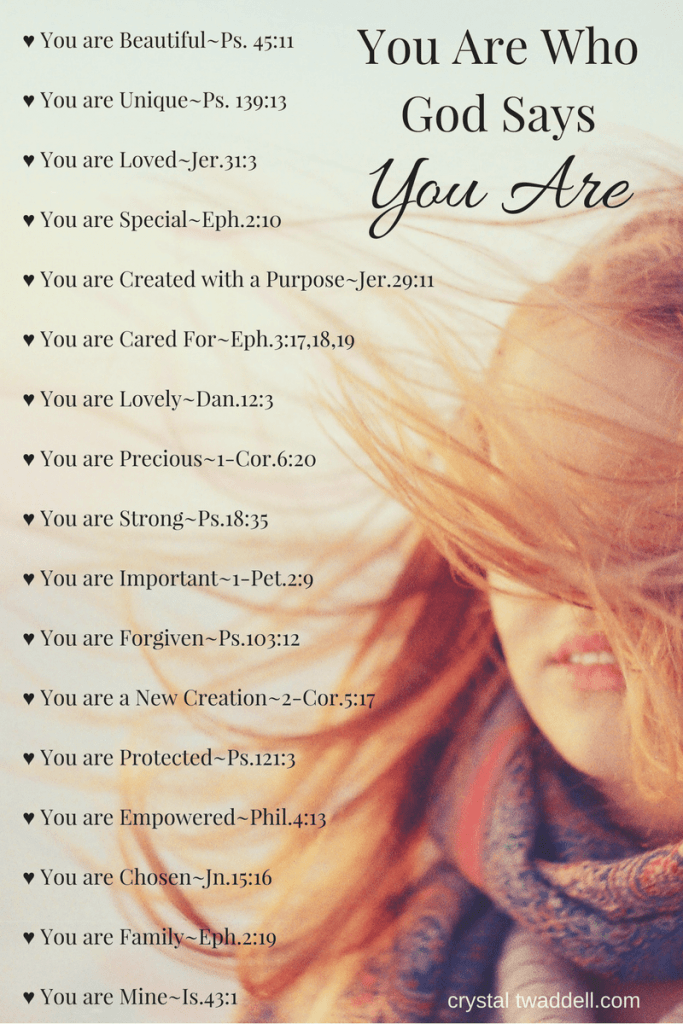
You are who God says you are.

Life is challenging during a regular year, but especially during this past year; so many are struggling. Struggling with being the person they want to be, finding the friends they long to have, getting out and doing the things they wish they could do.

I’m reminded of the scene in Disney’s Moana where Moana approaches Te Kā the lava monster. Te Kā had her heart stolen and is blinded by rage and anger. Maybe we have lost heart and have become taken over with bitterness. Maybe we’ve shut others out and like Te Kā, we are blinded by our emotions. A turning point in the film happens when Moana reminds Te Kā, “They have stolen the heart from inside you. But this does not define you. This is not who you are. You know who you are.” We may need someone to remind us that we are off course and that we are not defined by what has happened to us or what has been done to us.

Maybe you’ve been hurt or isolated or unworthy. Perhaps you have felt betrayed, excluded, or written off. Maybe you have been misjudged, gossiped about or rejected. Or it could be that you have made legitimate mistakes and experienced guilt and condemnation. Whatever the case may be, you can let circumstances and misperceptions cloud your vision of the person you were put here to be. When this happens, more than any other time, we need God. We need to remember who he says we are and who he put us here to be:

God says you (yes you) are beautiful, unique, loved, special. You are created with a purpose. You are cared for, lovely, and precious. You are strong, important and forgiven. You are a new creation. You are protected and empowered. You are chosen. You are family and you are his.

God is God for all of us, no one is excluded. No one is written off or rejected by him.

If you struggle with seeing yourself irrationally through your own eyes, or make the common error of trying to see yourself through someone else’s eyes. Take a step back, and remember who you are in God’s eyes. That is the only perception that is 100% true and real.

kids · parenting · wisdom

You are good.

Last school year, when my youngest daughter was in kindergarten, she had homework to write three “I am” sentences. Three sentences that began with “I am” that were true about herself. As I was going through some of her old papers this week, I came across this homework paper again.

Her first sentence brought tears to my eyes:

I AM A GOOD PERSON.

I echoed back to her, “You sure are a good person.”

Don’t we all need to hear that? And to know that is powerful.

But the truth is we all have times in our life when we question our goodness. We feel less than. We allow the words or perspectives of others taint our self-image, or we let our disappointment in our own thoughts, words or actions affect how we view ourselves. The Eleanor Roosevelt quote comes to mind, “No one can make you feel inferior without your consent.”

But why did her words cause me to tear up? I think it was for two reasons:

1. I questioned if I ever made her feel she is not good somehow? As a parent, am I affirming her enough? Does she really know she is good? What can I do to make sure this precious child never questions that statement and maintains her self-worth?

2. Am I good? I want to be good – a good person, a good mom, a good friend, a good teacher. I want to be seen as good, perhaps more than anything.

A few of years ago, I picked “good” as my word for that year and thought I would share some words that brought me comfort then and even still as I reflect on them now.

In a world where we see evil at every turn, I want a constant reminder to combat it with GOOD.

When I hear complaining and gossip around me and feel tempted to join in, instead I need to remember to look for the GOOD.

When I have a conversation, interaction, Facebook post, or decision to make, I want to make sure I’m adding GOOD to the world with my words and choices.

When I feel envious, angry, hurt or resentful, I can choose to act on my emotions or I can choose to see it as an opportunity to do rise above and model what is right and good.

When those around me feel less than or unworthy, I will make sure they know that they are good, that there is much more right about them than wrong.

You are good.


personal development · wisdom

Staying in Your Power

Last night, I fell asleep listening to an audio. Then when I woke up, the last few minutes of the next “recommended for you” was playing and ending. It was a two hour audiobook called The Power Is Within You.

It’s all about reclaiming your power, and that it’s all within your control. That is great news!

The author was abused herself as a child, and she begins by explaining that those of us who experienced abuse will subconsciously place ourselves in situations of abuse (hers was physical, mine mostly verbal.) She addressed how you can break this cycle and get back to a place of self-love, through forgiveness and sending love to those who have hurt you.

The book points you to self-love so that you can then love others. And to love yourself, you must use conscious language and be very aware of the words you speak, how you speak to yourself and to others.

It goes on to say you need to stop complaining and gossiping, because negative words bring more negativity into your your life. When you complain, criticize or gossip, when you are talking about others, your mind internalizes it as if you are speaking about YOURSELF. When you talk negatively about someone you need to ask yourself why you feel those things about yourself. The things we dislike in others are the things we don’t like about ourselves. Mic drop!

We often don’t think we deserve. This comes from our childhood, and our power comes from our deservability. What keeps us from feeling we deserve is typically someone else’s belief that we have accepted as truth. If we can let go of this misperception, we can return to our power.

Another part that resonated with me the most was what she had to say about guilt. Maybe you were made to feel like a burden as a child. As an adult this can make you feel like you’re bothering others, you’re in the way, or you’re inconveniencing someone whenever you need anything. Maybe you find yourself apologizing to others when you’ve done nothing wrong. This again points to a lack of deservability which is you trying to see yourself through someone else’s misperception. Stop that!

By dropping these old patterns and leaving your past behind you, you can move forward in your power. Your past does not serve you.

One of the main concepts she proposes is using affirmations and making sure the words you speak are positive. But she defines affirmations differently than what you might think. The traditional meaning of affirmation is a positive statement. Anything we speak is an affirmation and we reap the consequences of all words we speak, good or bad. The book is very law-of-attraction-ish and teaches that the words we speak come back to us some how in the way of experiences. We have to really pay attention to what we say!

I can’t recommend this book enough, whether you listen to the audiobook like I did or if you prefer to just read it. It came along for me at the perfect time. If you have been walking through lows related to past guilt, unworthiness, negativity or not feeling you are deserving, this book will give you the tools and knowledge you need to stay in your power!

wisdom

Keeping your peace…in traffic

You wake up in the morning, have a cup of coffee, read, meditate, and get your mind in the perfect calm state. Then it seems within seconds of encountering other humans (traffic), your calm feels threatened. These moments can either derail your peace, or you can be intentional and maintain your peace in spite of these bumps in the road.

Morning commute was the time of day that tried me the most. In the morning, you have places to be, people to see, and time is of the essence. I could come unglued if I got behind a slow driver, afraid they would make me late.

Tailgaters wouldn’t make me late, but they would make me so anxious! I was in a hurry too, but was it really necessary to invade my personal space?

Worst of all was getting caught in stop and go traffic. Driving in large cities and on major highways made my heart race and my hands sweat. In school zones, if the crossing guard was in position, I was at their mercy. I would arrive at work a frazzled mess, and full of blame directed at whoever happened to cross my path and slow me down. Surely they were to blame.

Then one day, I heard a podcast that changed my thinking. It had never occurred to me that it was entirely my fault, EVERY time I’m late. Every time. How was it my fault? Simple. “If you think some other person is making you late, you need to leave your house way, way earlier,” the speaker said. This resonated with me and humbled me. It may sound obvious to some reading this, but that one statement was life changing.

Over time, I’ve trained myself to keep my peace by changing my perspective. These days, I make sure to leave for work pretty early, so I’m never worried about running late and therefore never in a hurry. Now when I get behind a slow driver, I go around them if I can, but if I can’t I choose to see it as an extra time to listen to my podcast or favorite songs.

Now, if there’s an alternate route I can take that has less traffic, I will choose it every time. When I’m in larger cities I always select the “avoid highways” option and take backroads instead of interstates and highways. These routes are longer, but usually save me time and stress.

And that tailgater? I just pull over to the side of the road and let them go ahead of me. It’s a win win. They get to drive faster and I get to keep my peace.

And I’m learning everything in life is like driving. Moments in life can send us into blame and knock us out of our peaceful state. But there is no blame. It’s all on us – we do it to ourselves. By taking responsibility and making simple changes in how we respond to the things that once frustrated us, we can see them all as good. Things are always working out for us.

Takeaways:

  • Leave earlier. Give yourself more than enough time so you’re not in a hurry.
  • Take an alternate route with less traffic.
  • Pull over and let tailgaters pass you.
  • Take responsibility. There is no blame.
  • Enjoy your drive. See it as a peaceful time.
Uncategorized · wisdom

Stop Using Shame and Guilt to Influence Behavior

Most of us have been on the giving and receiving end of guilt and shame. But is it effective? Does it get us anywhere when we dish it out or when we are forced to take it?

Have you ever shamed someone or tried making them feel guilty to get them to behave in a certain way? I think we all probably have in some form or fashion.

It could have been trying to make your spouse or significant other feel bad about some incident where you felt wronged. You want to make extra sure they NEVER do that again.

Or maybe it was shaming your child over a bad choice they made; you want to be certain they realize how terrible their decision was so they will make the right choice next time.

It could be that you wanted a co-worker or employee know that you are not pleased with their actions and felt like it was time that SOMEBODY let them know. After all, if you don’t tell them, they can’t change, right?

No matter what the circumstance, any time you try using guilt or shame to influence someone’s behavior, one thing is for sure, you’re not endearing the other person to you. Here is a news flash: shame never inspires or motivates better behavior. It only perpetuates low self-esteem and withdrawal.

Can you think of a time when you were shamed or made to feel guilty? Most likely, especially if you already had issues with self-worth, it sent you on a downward spiral of negative thoughts. Any and every incident where someone shamed you similarly may have come to mind. We are our own worst critics, and life is hard enough already. When someone has taken it upon themselves to point out your shortcomings, down, down we go. Whether done to your face or behind your back, it stings.

People may be well-meaning when they feel the need to shame or impose guilt, believing no one else has never addressed a person’s issues and so they need to be that someone who finally comes along and puts the person in their place. “Let me tell you how terrible you are and what you did. Someone should.”

What is missing from this is the big picture of what may feel like healthy venting to the one shaming, but in reality the repercussions of the harmful words sends the victim (YES, VICTIM) into an even weaker emotional state than they were previously.

I remember a co-worker having this awesome quote in the signature block of her emails and it is perfectly placed here: You will inspire someone much more by lighting a fire inside them than lighting a fire under them.

Isn’t that what we really want? To inspire? Uplift? Encourage? Oh my goodness, that language feels so much better!

Here’s what to consider instead. Consider catching people when they’re good. Consider making a list of positive aspects of what the person is doing right. Everyone does some things right. EVERYONE.

Your spouse or significant other? Consider letting them know when you are pleased with them. That issue that feel you need to shame them with or make them feel guilty? Instead, concentrate on what you want them to become instead. Believe in them, that they will become that vision of the person you want them to become.

When your child makes a poor choice, instead of raking them over the coals, think about the opposite end of the stick. The child you know they can be. Put an incentive in place for them to reach that positive goal.

When you have a co-worker or employee and you feel like it’s your role to let them know their shortcomings, INSTEAD, look at the flip side of the coin: encourage them and inspire them when you see them doing what’s right. Assume positive intentions. Let them know you believe in them. Typically, when someone is performing below their potential, what they REALLY NEED is encouragement. A positive word. They more than likely already are aware of any negative qualities you may feel the need to point out. We are all our own worst critics. If you really want to make an impact, SPEAK LIFE into them. Let them know positive ways you envision them in the future. BELIEVE IN THEM!

I hope this has challenged your thought process on how to influence change in those around you. Light a fire within them, not a fire under them!

law of attraction · wisdom

Vision Boards: Your Best Bet for New Year’s Goal Setting

You can count on hearing lots of talk about goal setting and resolutions on New Year’s Day. You’re probably doing it yourself in some form or fashion.

Did you also know that most people fall off the bandwagon in the first thirty days of setting their goal(s) for the New Year?

What might make a difference for you and keep you from becoming another statistic is creating a vision board.

What is a vision board? A vision board is a board filled with images that represent each of your goals for the coming year.

The idea is that you keep these images in front of you, placing the board in a prominent location where you will see it every day.

Seeing those images that represent your dreams on a daily basis help keep them on the forefront of your mind, and consequently make them more likely to manifest simply based on the fact you are giving more of your mental attention to them.

It can be cut and paste from magazines, or a collage of images created on your computer. It doesn’t need to take very much of your time.

Tips for creating your vision board:

  • Before you begin, make a list of goals or resolutions you would like to set for the coming year.
  • Goals are best if they are realistic while also a challenge. Somewhere within that range is ideal. You want some to be basic and very attainable to help you feel successful but some out of reach to keep you excited, eager and planful.
  • Gather magazines if you plan on cutting out pictures and gluing. I personally prefer digital images and finding these online. It opens up many more possibilities and makes quicker work of creating the board I really want.
  • When in groups of folks who were creating vision boards, I have noticed many were turning it into a board of inspiring quotes and words. This is fine, but then it isn’t really a vision board. I keep a book of words and quotes that inspire me separately. I try to keep my vision board focused on what it is: a collage of images that represent the goals I wish to attain.
  • It’s your vision board. You can make it what you want. It’s not really for anyone but you, so there are no rules. Anything I’ve mentioned above is just giving my own feedback from 10+ years of creating vision boards.

Here is my 2019 vision board, and just as always, so many of these have manifested or are about to. I will add my 2020 board once it’s completed!

You may also be interested in making vision boards with your children. Check out my post Making Vision Boards with Kids.